


What It Is, Why It Matters, and Whether Supplements Really Work
Collagen is having a moment, in powders, drinks, capsules, and every social media feed everywhere.
But beyond the glossy marketing, what exactly is collagen, does our body need it, and are supplements really worth the hype?
We like to look beneath the label. So let’s dig into the science, the myths, and the nourishing ways to support your body’s own collagen production. Naturally and thoughtfully.
First Things First: What Is Collagen?
Collagen is the most abundant protein in the human body. Think of it as the scaffolding that holds us together: a fibrous structural protein found in skin, muscles, bones, blood vessels, connective tissue, joints, organs, and even the cornea of the eye.
It gives skin its firmness, joints their flexibility, bones their resilience, and tissues their strength.
In short: collagen is foundational.
Why Collagen Matters
As we age, our natural collagen production gradually slows. This is a normal part of life.
We begin to notice:
- Skin becomes drier, thinner, and less elastic
- Fine lines and wrinkles begin to appear
- Joints may feel stiffer or less cushioned
- Bones can lose density over time
- Hair and nails may become more brittle
Collagen isn’t about chasing youth. It’s about supporting the structures that keep us moving, stretching, laughing, lifting, and a better way to live.
The Health Benefits of Collagen
Skin: Hydration, Elasticity and Structure
Collagen makes up around 70% of the dry weight of skin and helps maintain firmness and moisture. As collagen declines with age, there’s less structure for water and hyaluronic acid to bind to. This can leave skin drier and more vulnerable to damage.
Research suggests collagen supplementation may improve skin hydration and elasticity over 8–12 weeks of consistent use.
Joints: Cushioning and Comfort
Cartilage, ligaments and tendons all rely heavily on collagen. In fact, tendons and ligaments are made up of around 80% collagen.
Healthy collagen levels help:
- Maintain joint flexibility
- Support cartilage repair
- Reduce wear and tear over time
- Improve resilience during movement
From runners to gardeners collagen plays a quiet but vital role.
Gut Health: Supporting the Inner Lining
Collagen helps maintain the integrity of the intestinal lining.
Emerging research suggests collagen-derived peptides may help support gut barrier function and beneficial gut bacteria, contributing to smoother digestion and a more balanced microbiome.
Bones: Strength from Within
Bones are not just mineral. They’re built on a collagen framework. Around 90% of bone matrix contains collagen.
Without enough collagen, bones may become more brittle and prone to fractures. Supporting collagen production may help preserve bone density as we age.
Muscles, Hair and Nails
Collagen provides amino acids such as glycine, proline and hydroxyproline. All essential building blocks for:
- Muscle recovery
- Tendon repair
- Hair structure
- Nail strength
Healthy collagen doesn’t just support movement — it supports everyday resilience.
So… Are Collagen Supplements Pointless?
This is where the debate gets interesting.
Some critics argue collagen supplements are unnecessary because collagen is simply protein. Like all proteins, it gets broken down into amino acids during digestion.
That part is true.
When you consume collagen, your digestive system doesn’t send it straight to wrinkles, joints, or skin. The body breaks it down, absorbs the amino acids, and then uses them where needed most.
So why do people still take collagen?
The Science Behind the Debate
The Skeptic’s View: “It’s Just Protein”
The argument against collagen supplements goes like this:
- Collagen is digested like any other protein
- Amino acids go into a general pool, not targeted delivery
- Cheaper proteins can supply similar amino acids
- Collagen is incomplete as a protein source (it completely lacks tryptophan, and is very low in isoleucine, leucine, and methionine)
This means collagen is not a miracle shortcut.
The Emerging Evidence: Bioactive Peptides Matter
Hydrolysed collagen, also called collagen peptides, may behave differently.
Because it is broken into tiny peptide chains, some researchers believe these peptides survive digestion and act as biological messengers, signalling the body to stimulate its own collagen production.
One amino acid in particular, hydroxyproline, appears especially relevant because it is highly bioavailable and linked to connective tissue repair.
So no. Collagen is not magic. But nor is it meaningless.
It may function less like a direct replacement and more like a gentle nudge to your body’s own repair systems.
What Causes Collagen Loss?
Several everyday factors accelerate collagen decline:
1. Natural Ageing
From our mid-20s onward, collagen production gradually slows.
2. Sun Exposure and Pollution
UV rays and environmental pollutants generate free radicals that damage collagen fibres.
3. Excess Sugar
High sugar intake can stiffen collagen through glycation, making tissues less supple.
4. Smoking
Cigarette smoke increases oxidative stress and breaks down collagen faster.
Supporting Collagen Naturally
The good news: our bodies are designed to make collagen, if we provide the right ingredients.
Collagen-Rich Foods
Plant-Based Building Blocks
While plants do not contain collagen itself, they do provide amino acid precursors and cofactors needed to make it:
- Legumes
- Nuts and seeds
- Soy foods
- Leafy greens
- Berries and citrus fruits
Vitamin C Is Essential
Vitamin C is crucial for collagen synthesis. Without it, the body cannot effectively build collagen.
That’s why pairing collagen-supportive foods with vitamin C-rich produce is so important:
- Oranges
- Kiwi
- Peppers
- Broccoli
- Strawberries
Vegan Collagen: What Does That Mean?
There is no true plant-derived collagen identical to animal collagen, because collagen itself is animal-based.
However, vegan collagen builders can supply:
- The same amino acid precursors
- Vitamin C
- Supportive minerals
- Beneficial bacteria for gut synergy
The most effective vegan collagen-supporting supplements aim to mimic the amino acid profile of human Type I collagen rather than supplying collagen directly.
Our Take at Infinity Foods
We believe nourishment should start with what is on your plate.
Collagen supplements are neither miracle cure nor meaningless fad. They sit somewhere in the middle: a useful tool for some people, especially when paired with a nutrient-rich diet and supportive lifestyle habits.
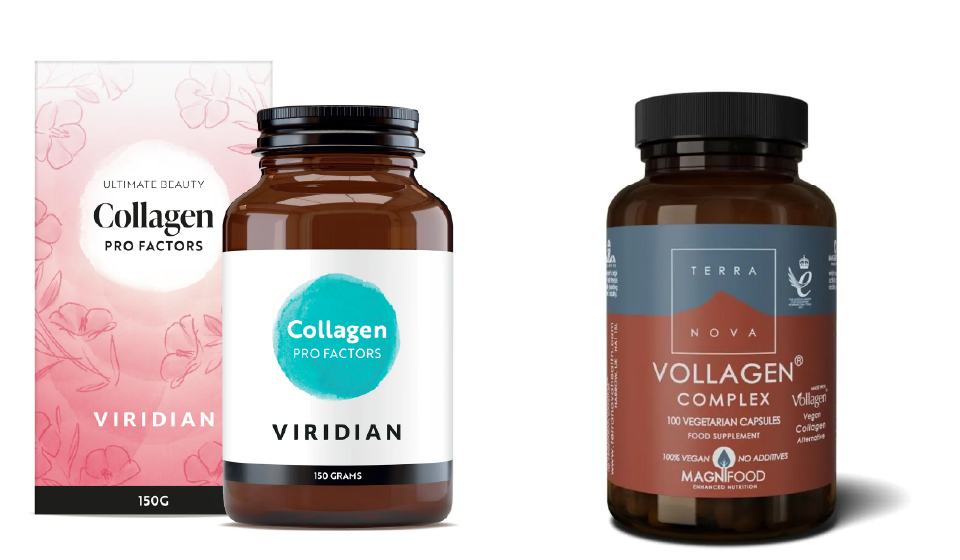
For those looking to explore collagen support, we stock carefully chosen options including Viridian Collagen Pro Factors -£45.95*, a thoughtful formulation designed to provide the precise amino acids found in human Type I collagen, alongside vitamin C and a unique friendly bacteria strain to support the body’s normal collagen production. It’s an approach that focuses on giving your body the building blocks it needs, rather than simply adding collagen itself.
For plant-based customers, we also offer Terranova Vollagen Complex Capsules £20.30*, a vegan collagen support supplement providing 1000mg of amino acids per dose. Enhanced with Terranova’s MAGNIFOOD blend of rose hips, matcha, aronia and bilberry, it is designed to support skin, hair, nails and joint health, while promoting antioxidant protection and tissue repair.
And because collagen is only one piece of the protein puzzle, we also stock a wide range of high-quality protein powders from trusted brands including Marvellous Superfoods, VIVO Life, and Pulsin. Excellent choices for supporting overall protein intake, whether your focus is recovery, muscle support, or everyday nourishment.
there’s a better way to live
* prices accurate to the date of publishing. Prices may have changed. The price in the shop on the day of purchase will be upheld, other prices seen online will not be price matched.