


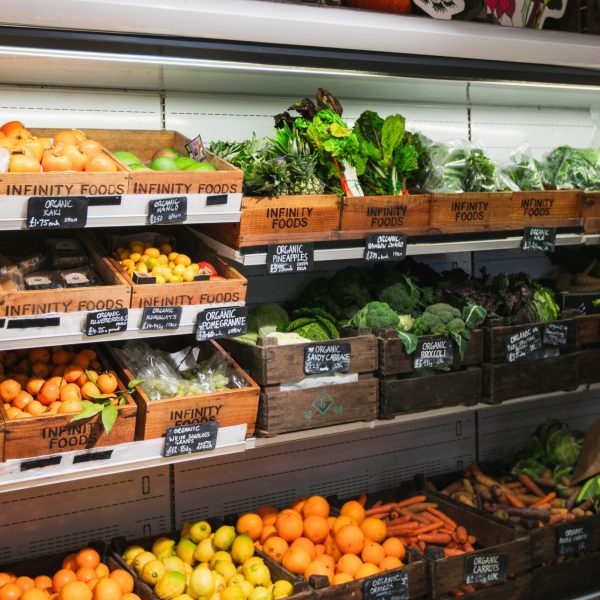
People are buying more organic food than ever. But there’s a problem.
While demand for organic food has grown, the amount of farmland in England being farmed organically has barely changed. That means more and more of the organic food we eat is coming from overseas.
Now the Soil Association is calling for something that could help change that: an Organic Action Plan for England.
So, what’s the big idea?
The idea is pretty simple. If we want more organic food grown here, we need to make it easier for farmers to grow it, and easier for businesses and shoppers to buy it.
England hasn’t had an Organic Action Plan for a generation. In that time, the evidence behind organic farming has grown, more people have chosen organic and other countries have shown what can happen when farmers, businesses and government work together.
The Soil Association says that just 3.4% of England’s farmland is currently organic. It believes a target of 10% could help support healthier soils, more biodiversity, greater climate resilience and nature recovery. All while creating opportunities for farmers and communities.
That’s quite a leap. But perhaps it’s time we aimed a little higher.
Organic is already popular
You might think organic is still a niche choice. It isn’t.
Four out of five UK households buy organic food at least once a year, and the UK organic food and drink market is now worth £3.9 billion.
The trouble is that organic farming hasn’t kept pace with all that demand.
So while shoppers are filling their baskets with organic food, farmers aren’t necessarily getting the support, infrastructure or routes to market they need to produce more of it here.
It’s a bit like having a queue outside the shop, but not having enough shelves to stock it. Something we couldn’t imagine!
From farm to fork
Growing more organic food isn’t just about helping farmers convert their fields.
We also need the infrastructure to get that food from the farm to the people who want to eat it. That means processors, storage, distribution and routes to market all need to grow alongside production.
The Soil Association describes it as three things that need to move together: Production, Infrastructure and Demand.
Get one part out of step and things can quickly grind to a halt.
For us, this is where the idea really matters. A thriving organic food system needs everyone pulling in the same direction; farmers, growers, processors, retailers, caterers and you – shoppers.
More than just what’s on your plate
Organic farming can bring benefits beyond the food it produces.
The Soil Association points to evidence around soil health, biodiversity, water quality, climate resilience and animal welfare. Organic farming also reduces reliance on synthetic inputs.
And there’s another opportunity here.
Growing more food closer to home would help strengthen our food security and reduce our reliance on imports. It would also support local economies, create skills and training opportunities, and give more people a way into farming.
That’s especially true for smaller organic market farmers, which can bring communities, shorter supply chains and new growers together. Something we know a little about.
What would an Organic Action Plan actually do?
The Soil Association is calling for some pretty practical things.
A national ambition for 10% organic farmland. Longer-term support for farmers making the switch. Investment in processing, storage and distribution. More organic food in schools, hospitals and other public settings. And better information about what’s being produced, where it’s going and where the gaps are.
In other words, it’s not just about setting a target and hoping for the best.
It’s about joining the dots.
We think it’s worth backing
We’ve been selling organic food in Brighton since the 1970s. We’ve seen organic go from something a small group of people sought out to something found in shopping baskets across the country.
And we think there’s a better way to grow it.
More healthy soils. More wildlife. More British-grown organic food. Stronger farming communities. Shorter supply chains. And a food system that’s better prepared for whatever comes next.
An Organic Action Plan won’t do all of that on its own. But it could give farmers, growers and the wider food industry a clearer path forward.
The demand is already there.
Now it’s time to grow what we need to meet it.
there’s a better way to shop, eat, live & work
To find out more visit the Soil Association and Department for Environment, Food & Rural Affairs